JUSTICE DELAYED: Lives on Hold
SHREVEPORT, La. (KSLA) - Until recently, Louisiana had gone more than a decade without any executions. Now, state leaders are ramping up efforts to carry out those sentences for death row inmates.
RELATED VIDEO: Louisiana AG, Caddo DA discuss state’s resumption of executions
In 2024, the Louisiana Legislature and the governor signed off on a bill allowing nitrogen gas to be used to execute death row inmates. Previously, the state used lethal injection. But the method hadn’t been used in many years due to legal and political battles. Louisiana recently became the fourth state in the nation to allow nitrogen gas executions, behind Mississippi, Oklahoma, and Alabama.
In January of 2024, Alabama became the first state in the country to execute someone using the method. Kenneth Eugene Smith was put to death after being sentenced for the 1988 murder-for-hire killing of Elizabeth Sennett, a preacher’s wife.
Then in March of 2024, for the first time in 15 years, Louisiana executed an inmate: Jessie Hoffman. Nitrogen gas was used in his execution too. A jury convicted him in the 1996 rape and murder of 28-year-old Molly Elliott.
CHRISTOPHER SEPULVADO
DeSoto Parish inmate, Christopher Sepulvado, was supposed to be the first person to be executed in Louisiana using nitrogen gas, however, he passed away from natural causes less than a month before his scheduled execution date. A judge sentenced him to death for the 1991 murder of his 6-year-old stepson, Wesley Allen Mercer. Authorities say the child was beaten and scalded to death. KSLA talked with Sepulvado’s son, Jeremy Bryan, after his father died on death row.

“I feel like it takes too long. If the crime is committed and there’s undeniable proof that the crime was committed, why wait so long? To carry out justice for the victim’s family, you know, that’s still... that’s putting the victim’s family in turmoil too,” said Bryan.
VIDEO: Son of convicted child killer wishes execution had been carried out sooner
MORE VIDEO: Mother of murdered child tells her side of the story
Currently in Louisiana, 55 people are on death row. Thirteen of those are from Caddo Parish. They are:
- Laderick Campbell
- Nathaniel Code
- Michael Cooks
- Percy Davis
- Curtis Deal
- Felton Dorsey
- Darrell Draughn
- Cedric Edwards
- Bobby Hamilton
- Daniel Irish
- Marcus Reed
- Lamondre Tucker
- James Tyler
Other inmates on death row in northwest Louisiana are:
- Jeremiah Manning - Bossier
- Tracy Lee - Natchitoches
- Donald Wright - Webster
And one of those inmates from Caddo Parish has been waiting on death row for decades...
NATHANIEL CODE
Nathaniel Code was convicted of killing four people, and charged with another four killings in Shreveport’s Cedar Grove neighborhood. Family members of the victims are wondering why he’s still sitting on death row 35 years after being found guilty.
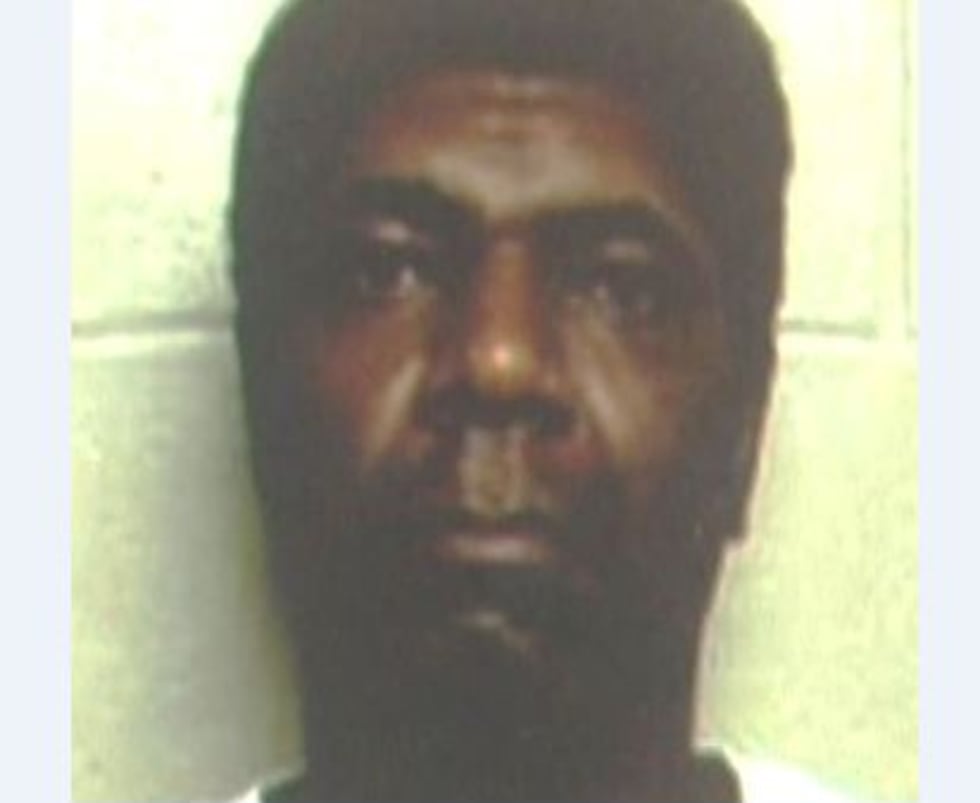
Family members of Code’s victims are still speaking out for justice for their loved ones... who are long gone.
“So we’ve been waiting 40 years for justice, man, for justice. And this dude is still sitting on death row,” said Albert Culbert.
Culbert has been fighting for justice for decades, waiting for a death sentence to be carried out that was first delivered in 1990.
VIDEO: Albert Culbert testifies during Louisiana legislative panel on the death penalty
“My mother, my father, my baby brother, all of my cousins on my mother’s side of the family... The family are gone. All my uncles on my mother’s side of the family, on my daddy’s side of the family are gone. And when? When? When Nathaniel Code committed these murders, when he snatched the life out of my brother, my sister, my niece, all those people was in good health, man, you know. But now that they’re gone and then Code is still sitting,” Culbert said.
Nathaniel Code is known as one of Louisiana’s most brutal serial killers. He was charged with at least eight killings in the 1980s in Shreveport’s Cedar Grove neighborhood. Three of his victims were Albert Culbert’s family members. Culbert remembers the day he found out while serving in the military overseas in Spain.

“When my first sergeant first told me about the news, he said that your mother is requesting your presence for the death of your sister. I said, ‘My sister?’ I said, ‘Oh, what happened?’ They said they don’t know. So I got, you know, I was sitting down. I was getting upset. ‘She is also requesting your presence for the death of your brother also.’ Now you know, now I’m like man, it’s really kicking in. I said, ‘Wait a minute. You said my sister. Now my brother too?’ He said, ‘Yeah, sergeant.’ And also and then he said also your niece. Then, when he said that man, I just lost it, man. I didn’t know what to do,” Culbert recalled.
In 1985, Culbert’s sister, Vivian Chaney, his niece, 15-year-old Carlitha Culbert, his brother, Jerry Culbert, and Billy Joe Harris were all found brutally murdered at a home on E 72nd Street in Shreveport.
“When I came home, you know, that’s when I actually found out, you know, what really, really happened. You know, that they was murdered,” Culbert said.
JUSTICE DELAYED: LIVES ON HOLD - PT. 1
However, it’s believed Culbert’s family weren’t Code’s first victims. A year before in 1984, Deborah Ford was found murdered in her home on E 74th Street. Her daughter, Latotia Brown, is still fighting to see justice carried out.
“I’m sad with this justice system. I really am because I’m old enough to pay taxes on him. I have two nieces that are old enough to pay taxes on him. Me and my sister are paying taxes on a man that took a lot, took away from us, took a lot from us and from the other family, from the other families. My grandmother died. My grandfather died. I had two aunts to pass away. Nothing was done. We hadn’t received justice yet. It’s time,” Brown said.

Brown was just a small child when her mother was killed. Ford had recently moved into the home on E 74th Street.
“Yeah, she’s really excited about the house because it was her own. She’s gonna’ have something of her own to raise me and my sister in. She’s going to be more independent,” Brown explained.
Latotia Brown, who was 9 at the time, and her 5-year-old sister were living with their grandmother so they could go to better schools. Brown saw her mother just hours before she was killed.
“That night we moved. My mom took us school shopping. The next morning, my mom was gone. Gone. For nothing,” Brown said.
Ford was found bound and stabbed, with her throat cut too. It’s a day Brown will never forget.
“My grandmother walked in and she had something else on, totally different, something else. She took me and my sister in the room and said my mom had gone to Heaven. And I said, ‘My mom’s dead?’ She said, ‘Your mom’s going to Heaven.’ She said, ‘Your mom’s dead.’ I said, ‘My mom’s dead?’ and she said, ‘Yes.’ And I lost it. I wanted to die,” Brown remembered.
Brown was a young child when her mother was murdered, so she didn’t grasp the magnitude of it for some time.
“I did not. I did not until I was old enough to start reading things myself. At school I would like go to the library and look up things and I would start reading stuff and I... because my family, they couldn’t tell us that it would happen. This man almost decapitated my mom. I did not know that. It was an overkill,” Brown said.
Just a few months before Ford was killed, Code was released from the Louisiana State Penitentiary in Angola on good behavior. He had served around half of a 15-year sentence for aggravated rape.
“Didn’t know him at all. Just I found out that he stayed behind us,” Brown explained.
Gary Lindsay investigated all of the crime scenes connected to Code. He was a detective with the Shreveport Police Department.
“It was from there with the similarities between Deborah Ford and the Chaney that we thought there was a possibility that those two were related. We actually worked our regular shift during the day and then at night, we would meet up and we would literally ride Cedar Grove. Three or four in the morning trying to glean information as to because we were pretty confident that it was somebody that was familiar with the neighborhood,” Lindsay said.

Lindsay served as part of a task force that was trying to catch who they suspected was a serial killer on the loose. And 40 years later, they are crime scenes Lindsay says he’ll never forget.
“He liked to cut and the way he controlled the Chaney scene... He went in, or to our belief that he went in to control that scene immediately by taking out or killing the two males. And that just left Vivian and the daughter and he controlled that situation by using the daughter... and what he did to the daughter. It’s unimaginable,” Lindsay said.
Three years after Ford’s murder and two years after the Vivian Chaney murder, another horrific crime was committed. In 1987, Code’s grandfather, William T. Code, along with 12-year-old Joe Robinson and 8-year-old Eric Williams were all found dead at Williams’ home on W 66th Street in Shreveport.
“Learned that there was a person in the crowd outside that claimed to be a grandson of Mr. Code. So it was determined for us to take him to the detective office,” Lindsay explained.
Lindsay questioned Code that day. During their conversation, he says Code said he was the last person to see them before they died. He also gave explanations for every item used to kill the three people: cords from an iron, vacuum cleaner, and phone. The items were used to tie up and choke the victims.
“I was shaking. I walked out of the office. My lieutenant had come back from the scene and I told him, I said, ‘I’m talking to the killer,’” Lindsay said.
They then connected Code to the quadruple murder at Vivian Chaney’s house a year prior, matching his palm print to the one in her bathtub where he held her down and drowned her.
“It was elation because we were 100 percent sure we had the right guy,” said Lindsay.
NATHANIEL CODE’S TRIAL
Scott Crichton recently retired from the Louisiana Supreme Court, serving as a justice for many years. Before that, he served as a district judge, but his career started ramping up after police arrested Code. The district attorney at the time appointed him to prosecute the case.
“It is ingrained in my memory. I spent a year pretty much on a night and day basis preparing for the trial,” Crichton said.
The trial lasted more than 20 days. It was a grueling and emotional experience for the families, and even for Crichton.

“Somehow, someway, that really impacted me. That moment in trial where I was tearing up, which I knew I could not do, but I did. But it was just too much of a reminder of my two sons. Then, they were just two and four and I thought, ‘How could anybody do any of this?’ And the depravity of and the evilness of this... these innocent children,” Crichton said.
The jury found Code guilty of the Vivian Chaney quadruple homicide, sentencing him to death. Since then, Crichton has served a whole career and retired. Meanwhile, Code’s sentence hasn’t been carried out.
“Never would I have expected that 34 years later, 35 years later, I would be talking about this,” Crichton reflected.
Code appealed after the guilty verdict, however, the Louisiana Supreme Court upheld the death sentence in 1993. A death warrant was signed for Code’s execution in the mid-90s, but was delayed multiple times.
“So you know, it’s a miscarriage of justice and this is a stellar example of a gross miscarriage of justice to have this extensive delay,” Crichton emphasized.
Crichton says he has stayed in touch with Albert Culbert over the decades, wondering when he’ll get justice.
“Why are y’all taking so long to do what y’all need to do that? That’s my message to the, you know, to the government. Nathaniel Code must and should pay his debt to society,” Culbert said.
Code has filed numerous appeals over the decades. Caddo Parish District Attorney James Stewart says his office is currently working on two recently filed appeals, claiming ineffective counsel and what Code says are issues with evidence.
“The courts have allowed Nathaniel Code to file another PCR matter back in state court. It was in federal court. It’s back in state court. They filed another PCR, another two PCRs. And we have... we are responding to those PCRs at this point. Every time the U.S. Supreme Court issues a ruling, then he comes back and says, ‘Well, based on that ruling, I have these issues I need to litigate.’ And so we’ve been fighting that on and on since the case was litigated. We’ve gone to state court, going to federal court. We’re going back to state court. We’re going back to federal court. We’re back at state court, so we’ll continue to fight,” Stewart said.

After a death row inmate exhausts all of their appeals, the DA then files a death warrant and sends it to the judge.
“My expectation is at some point, we will get to the end of the process,” Stewart said referencing Code’s execution.
KSLA’s Steven Maxwell asked Stewart if when all Code’s appeals are exhausted, would he send a petition to the judge.
“That’s my job,” Stewart replied.
“You have to do that?” Maxwell asked.
“Well, it’s my job when we’re at the point and we’ve resolved all the legal issues, my job is to file the petition and then it’s up to the judge to decide whether or not he wants to sign it,” Stewart explained.
Decades of uncertainty... the crimes reaching beyond the victims. It’s a constant reminder for their families, year after year.
Tiffaney Culbert and Shunta Singleton’s cousin, aunt, and uncle were killed in Vivian Chaney’s home.
“But we are still dealing with this man breathing and I can’t go and talk to my auntie. I can’t hang out with my cousin. You know, my cousin or whatever, they’re gone, but he’s still here,” Singleton said.

“We have some messed up laws in this state man, because they work for some, but they don’t work for others. You know what I’m saying? Thirty-five years they don’t work. So you know, I’m not really satisfied with the State of Louisiana man, when it comes to justice,” Culbert said.
Code’s attorney, Rebecca Hudsmith, sent KSLA this statement about the recently filed appeals:
“We have filed a pleading in Mr. Code’s case that raises questions about the validity of the forensic evidence presented at trial in support of guilt. Our highly qualified forensic experts have expressed opinions contrary to the state’s experts, and their opinions are supportive of innocence, which would entitle Mr. Code to a new trial.”
House Bill 675, formerly House Bill 572, successfully passed the full House and Senate is now on its way to the governor’s desk to be signed into law. The bill was introduced by State Representative Brian Glorioso, a Republican from Slidell. It outlines significant changes to the state’s post-conviction relief (PCR) system, the legal avenue that allows incarcerated individuals to challenge their convictions after the standard appeals process. Currently, people have two years from the date of their conviction to file for post-conviction relief. The bill would cut that timeline in half to just one year. Louisiana Attorney General Liz Murrill supports the bill.
MARCUS REED
One of Caddo Parish’s death row inmates up for post conviction review is Marcus Reed. After District Judge Donald Hathaway declined to grant the review, the case was appealed to the Louisiana Supreme Court. Reed was convicted and sentenced to death for the brutal shooting ambush of three brothers in Keithville. The youngest victim was just 13-years-old. The family of those boys is still waiting for justice.

“It’s something you can’t explain. It’s a feeling that... like it just takes everything away from you, everything out of you,” said Clara Morgan, great aunt of Jeremiah, Jarquis, and Gene Adams. “And when they pulled into the driveway, Marcus Reed was hid in the woods with an automatic rifle, and when the car pulled in the driveway, he starts shooting. He just shot the car all the way up, came on up to the car. Jarquis got out the car. He shot him point blank in the face down, then shot Jeremiah, then shot Gene in the back seat of the car.”


Jeremiah and Jarquis had lived with Morgan since they were toddlers. The night of the shooting, she remembers the boys headed out to drop off a cousin not far from where they lived. She says they were really good about calling to tell her where they were, but she says she happened to fall asleep early that night and woke up to a real life nightmare.


Jeremiah DeWayne Adams | Oct. 16, 1989 - Aug. 16, 2010
Jarquis Wesley Adams | Dec. 12, 1991 - Aug. 16, 2010
Gene Adams | July 12, 1997 - Aug. 16, 2010
“So my brother called. He passed. He said, ‘You heard from them boys yet?’ I said, ‘No.’ He said, ‘They said something happened down there.’ So I went down and they had it all roped off. So I drove into the driveway and the officers met me and they said, ‘No, you can’t go in here.’ And then after, you know, I told them who I was and who I was looking for, they said, ‘Ok, I’ll tell you where to go.’ They told me to go up to the sheriff’s station there on Mansfield Road and said when I get there, ask for the chaplain so the chaplain would come out,” Morgan recalled.

It was then she learned the reality of what she saw at the crime scene. Officers say Reed was upset because he thought the boys had stolen an Xbox gaming console, something that was never proven in court.
“The way it happened, I mean with all of them, like he hurt them and I think what hurts us more is we wasn’t there to protect them,” said Cherjuana Davis, cousin Jeremiah, Jarquis, and Gene.
“We dressed them all alike, we put them all in the same color casket,” Morgan remembered.

“I don’t remember the service. I don’t. I remember walking in. I don’t remember the service. I can’t tell you who spoke, what they said, what song they sung. I don’t know who I sat next to. I don’t remember. I really don’t remember,” said Davis.
“It was really hard for the entire family and I couldn’t imagine what Aunt Clara and Aunt Bernice and their mom and their brother and sister went through, because they were here. We came for the service, but then we were gone. I mean, we were still grieving out there, but they were physically here going through. So I couldn’t imagine everything that they went through like from day-to-day,” said Davis.

“Ain’t nothing like your brothers,” said Jade Adams, younger brother of Jeremiah, Jarquis, and Gene. “Every day. When I first got in the studio, that’s all I talked about.”
Jade used his music to help work through his feelings about his brothers’ deaths.

When asked if Reed got what he deserved by being sentenced to death, Morgan replied: “Dying is too easy for him. That’s the easy way out. But I do agree with the fact that he need to be dead.”

“Honestly, I can’t even imagine what would be punishment enough for what he did to them and to our family. I can’t even put it into words, but either way, them putting him to sleep... that ain’t how they went. Why he get to go so easy?” said Davis.
VIDEO: Marcus Reed sentenced to death for triple murder over Xbox
“Yeah, got to. Got to. It ain’t no want, I got to,” said Jade when asked if he’d witness Reed’s execution, if and when the time comes.
“Comfort comes from within with us being a family together, talking about the good times and remembering them as they were, not harping over what’s happening with Marcus Reed because I don’t care about him,” said Davis.
Talia MacMath, legal director for the Mwalimu Center for Justice (MCFJ), formerly known as the Capital Post Conviction Project of Louisiana, is now representing Reed in his post-conviction relief review. District Judge Donald Hathaway Jr. decided to grant a motion by the state to dismiss Reed’s application for post-conviction relief. Now, MacMath is appealing that denial to the Louisiana Supreme Court.
VIDEO: District judge dismisses Caddo death row inmate’s applications for post-conviction relief
“Both Darrell Draughn and Marcus Reed had not been through their appellate process, and nor have they been through their federal review process. It is not until a federal review process has been completed that somebody is eligible for execution, and James Stewart, just briefly right before these execution warrants were signed, said to the press that there were none of his cases that were ready for an execution warrant, and that’s accurate. He was right about that and a short time later, under the attorney general’s direction, I can only assume, these execution warrants were signed and they were improperly signed. The Louisiana Supreme Court told the district court that he had improperly issued those warrants because the appellate processes were not complete,” MacMath argued.
Earlier this year, execution dates were set for four death row inmates. Christopher Sepulvado died from natural causes just days before his execution date. Jessie Hoffman died in early March from the state’s chosen execution method of inhaling nitrogen gas.


“I think I don’t know enough and I think we don’t know as a community enough about nitrogen gas and I think the fact that the execution specifically of Jessie Hoffman was shrouded in a lot of secrecy should cause great concern to the people of Louisiana. I know you know of course that just one of the things that we know that is most concerning is of course that Airgas had told the Louisiana State Penitentiary that they did not want their products being used in an execution. And of course, the couple of pictures that we have from the execution chamber clearly indicate that Airgas products were used in that execution, so the fact that these are shrouded in secrecy is deeply concerning and I think signals a really concerning attempt by the state to not let people know about what these methods of execution look like when they’re being carried out,” MacMath said. “If we are going to carry out this ultimate punishment that we are doing it correctly and after a full review of that person’s constitutional claims.”
[What is nitrogen hypoxia and how does it work?]
The post-conviction relief application will include evidence that wasn’t presented at trial, or evidence MacMath says the prosecution knew about but never introduced.
JUSTICE DELAYED: LIVES ON HOLD - PT. 2
“The process of developing evidence in state post-conviction is that we present out allegations that are supported by reasonably available documentary evidence and it then needs to go to a hearing to test that evidence, and that’s the process that we are requesting. We have presented what we believe was not presented at trial and needed to be, and the next process is to test that evidence, where we put it on and the state has the opportunity to cross-examine that witness just like they would at trial,” MacMath said.

KSLA’s Domonique Benn asked why that witness wasn’t questioned during the original trial.
“It’s our contention that trial counsel was ineffective in failing to marshal that evidence and put him on. Forensic evidence that we’ve discovered post-conviction shows that the victim, the main victim, Jarquis, was actually not shot by the gun that was connected to Mr. Reed, was actually shot by a handgun. So there were two guns involved in this ambush, which is of course not the state’s theory at trial,” MacMath explained.


At the time, investigators weren’t able to find a second gun. MacMath says this is true.
“Correct. There was no second gun found out at the scene, however, the x-rays that were examined by a forensic pathologist after trial show injury consistent with a handgun, not with the kind of gun that was tied to Marcus at trial,” MacMath said.
The question becomes: What happened to the handgun? Did someone remove it from the scene? Was someone other than Reed involved?

“I think that’s exactly the kind of question that a jury needs to answer and a jury needs all the information in order to make that determination,” MacMath replied.
“We’ve learned how to deal with transgressions and back and forth. I think we learned how to deal with it and we just keep moving. We just keep moving and going throughout our days living our lives, because if we harp on that and worrying about this and that and the third, what’s going on with that, we would probably worry ourselves to death. So if it happens, it happens. I don’t think none of us is going to get comfort one way or the other,” said Davis.
“Keep looking at pictures so I’ll never forget they face,” said Jade.

Reed’s attorney, MacMath, says they’re laying out the post conviction review file to be submitted to the Louisiana Supreme Court by the end of June.
According to The Promise of Justice Initiative, since 1976, more than 80% of death sentences in Louisiana have been reversed on appeal. And nine people in Louisiana have been exonerated and taken off death row in the past 24 years. In 2014, Shreveport native, Glenn Ford, walked away a free man from Angola after spending 29 years on death row. He was diagnosed with lung cancer shortly after his release and died the following year.
Three years later, Shreveport native, Rodricus Crawford, walked out of Angola after Caddo Parish prosecutors formally dropped charges against him in the death of his 1-year-old son. His attorney was able to prove the child suffered from pneumonia and sepsis in his blood rather than the claim by a local doctor that the child had been suffocated.
These are just a couple of cases that lawyers who help with post conviction review fight to get heard on appeal. It allows them to bring forward evidence not heard at trial. Right now, the death warrants for Darrell Draughn and Marcus Reed are inactive and have been withdrawn until their appeals are exhausted.
But in the meantime, the families of the victims continue to live in limbo, waiting for a resolution that may never come.
Copyright 2025 KSLA. All rights reserved.